
Glacier
Poem / Prompt / Musings
Glacier
If you’d like, you can read an earlier draft of this poem here.
I reject the notion
that God is a dude,
but today when he spoke,
he was a he,
his voice the voice
of an Alaskan guide,
a guy named Buddy.

We paddled years ago,
me, my sisters, and Buddy
to the threshold of Aialik
to watch her
break apart.

Buddy was mellow and ever
tolerant of our antics—
stream of chatter,
exuberant splashing,
freestyle race to push
berg bits ashore—

but he spoke once
with the voice of a guide.
We obeyed him like
the voice of God.
Be quiet, he said,
and we fell into stillness,
so thick and warm,
it melted the ice.
Aialik cracked, heaved,
calved cosmologies
into the waiting bay.

If God was watching,
he must have seen me
break apart.
If God is watching,
he must see I am still
breaking apart.
I am tired of being
a brain in this world.
I want to be
this body of water.

Today, when my mind
drowned my surroundings,
old flood of shoulds
and what ifs,
swift river of thought,
all of it mine
and none of it me,

that voice broke in
like the warmest ice,

be quiet,
be quiet,
be quiet,

be still,
be still,
be still,

be,
be,
be,

b r e a k.

The Prompt
In the final four stanzas of my poem (beginning with “be quiet” and ending with “b r e a k"), my intention is for the repetition of words to feel like an echo—an echo of the echos of crashing ice, an echo of the echos of stillness and awe that still ripple through me from the experience of watching Aialik Glacier calve. An echo of the wisest voice that lives inside of me or inside of you.
Substack offers up pretty limited options when it comes to formatting and font. In the Word doc that I copied and pasted this poem from, the echoing words become a paler gray with each repetition. Here I used a combination of bold, italics, and plain text instead.
If you would like a prompt to play with today, then I offer you echoes. Take this wherever you would like, loves. Scream the word “echo” aloud, then repeat it at an ever softer volume. Find a tunnel. Find a cave. Stick your head in a clothes dryer. Scream the words you need to hear. Listen to them bouncing back.
Or if you’re feeling very serious and grown-up and prefer to stay that way, then drop down into the echo of your own memories instead. When and where have you heard literal echoes? Conjure as many sense memories as you can around those experiences. If you can’t remember, imagine.
What metaphorical echoes do you live with today? What are the sense perceptions and emotions and images that go along with them? Is there a story to tell? Is there a story to disrupt?
Play, loves. Unless you want to be serious. In which case, be serious serious serious. And in any case, if you’d like to share what you come up with, please do! I love reading your poems and reflections.
Below you’ll find a reflection from me about my inner process when it comes to writing and sharing poetry here on Substack. If you’re creating and sharing (or creating and not sharing) art of any kind, then I’d love to hear how it lands for you and how you answer the questions I’m posing of myself.
Reflections
Ever since reading the post “Want to Write Better Poems? Stop Sharing Them So Quickly” by Maya C. Popa (who is one of my favorite teachers and writers of poetry), I’ve been thinking about the question of why I share my poems here on Substack. And perhaps more to the point, why I share unpolished poems. Most of what I post is a first or second draft, un-workshopped, unrefined. For the most part, this is intentional. I choose this. And still, maybe simply because of the particulars of the moment in which Maya’s post found me, things got a little muddy in my head after I read it.
Should I be doing something differently here? More selectively curating my poems? Only posting more polished drafts? Am I thwarting my growth as a poet? Making an ass of myself?
To be clear, nowhere in Maya’s post does she accuse anyone of making an ass of themselves. I can’t imagine those words ever coming from her mouth or pen! And usually, I’m not especially harsh with myself either. But as some of you know, I’ve been in a harder stretch of life these past few months, and who doesn’t get more sensitive when they’re a few punches in?
I’m writing all of this to settle the mud in my own head and heart, but I’m also writing it because maybe you are having a muddy day today, or maybe you had one yesterday, or maybe you’ll have one tomorrow. I offer these reflections from my mud to yours. They speak specifically to the experience of writing and sharing my work here, but I think they have relevance to other ways of risking ourselves, to showing up before we’re “ready”—and certainly before we’re perfect—even though we have every intention of continuing to grow.
May we each find our own clarity. May we meet our mud and make some kickass pies.

I got started writing poetry on Substack in December of 2023, when I joined a 12-day poetry challenge created by Kaitlin Curtice. I wrote poems based on her prompts, read poems written by other participants, and for the first time, started poking around in the world of Substack poetry. I found beautifully heartfelt poems. I found poems with delicious turns of phrase, startling metaphors, new-to-me ways of thinking. Many of them were rough and unpolished, but they made me think and feel. Here’s one of the thought-feelings that emerged from that: oh, we’re allowed to post poems that aren’t perfect! We’re allowed to be amateurs, out loud!
I loved the kind and generous vibes on Kaitlin’s Substack, and I wanted to experience more of that. I wanted to help create it if I could. So, I started posting two poems and prompts every week, aiming for 100 over the course of that first year (2024). I wanted to write 100 poems anyway, and I figured that inviting others into the process would make it more fun and meaningful and hold me accountable. I reasoned that the obvious imperfection of my poems gave others permission to show up messily, too. Maybe my willingness to be imperfect, to write things that might later make me cringe a bit, could be a gift. An offering.
Sometimes, I waver over whether to post a poem or not. After all, almost every poem could be made better with a bit more time, a bit more patience. But what does better or good even mean in this context? I’m grateful to X. P. Callahan for asking me precisely that question in our Substack Live back in February. I’ve been mulling over it ever since.
I’ve been mulling over it but also flipping the question. To say what makes a poem good for me or you or anyone else (“good” will always be subjective and relative), I think we also have to ask what good is poetry? And here, too, there is no single absolute answer.
But what good is poetry to me? Right now? Why do I write it in the first place? Your answer might be very different from mine. (And you might need to sub in some activity other than poetry to find relevance; why do you paint? Why do you collage? Why do you bake?)
I do not write poetry for the finished product—or at least, I do not write poetry primarily for the finished product. First and foremost, I write for the process itself. The experience. I do it for the way it nudges me to be awake to my own life, to the tiny, absurd details of the world around and within me. I do it because paying this sort of attention and holding enough space inside me for words and metaphors to rise to the surface . . . that process writes me. It changes me.
I’m in this world to be changed. I’m here to risk myself, to break, to shatter, to grow into something wider and truer that holds not only the shards but the spaces between them, too.
I’m still trying to articulate thoughts and feelings about this to myself. I’m still sitting with many questions. For example, how do I balance all of this with my also-very-real desire to write “better” poems? How do I make sure that my quick-to-post approach doesn’t become a tool of avoidance— a protection from the necessity of risking myself in the hard work of revision? (As you can see from the poem I shared above, I do sometimes revise poems after posting them, but should I lean into doing more of that?)
In any case, the sharing and community that happen for me here on Substack feel like a beautiful part of this intention to risk myself. The intention to widen. The intention to reach outward from what is real and true and tender inside of me in hopes of connecting with the place that is real and true and tender inside of someone else. Because the process of writing poetry is what I value most, I want to invite others in. Two-ish years ago, I was drawn into the world of Substack poetry by poems that some might consider mediocre. Those imperfect poems met me, perfectly, just when I needed them. They held a match to my twiggy desires to write poetry and be in community, and my creative life has been beautifully on fire ever since. Thank you, each of you, for your contributions to that flame.
Why do you create what you create? How do you make choices about what to share and when to share it? What’s the relative importance of process and product for you? How do you stay clear with yourself about your intentions, particularly with diverging opinions and algorithmic noise buzzing in the background?
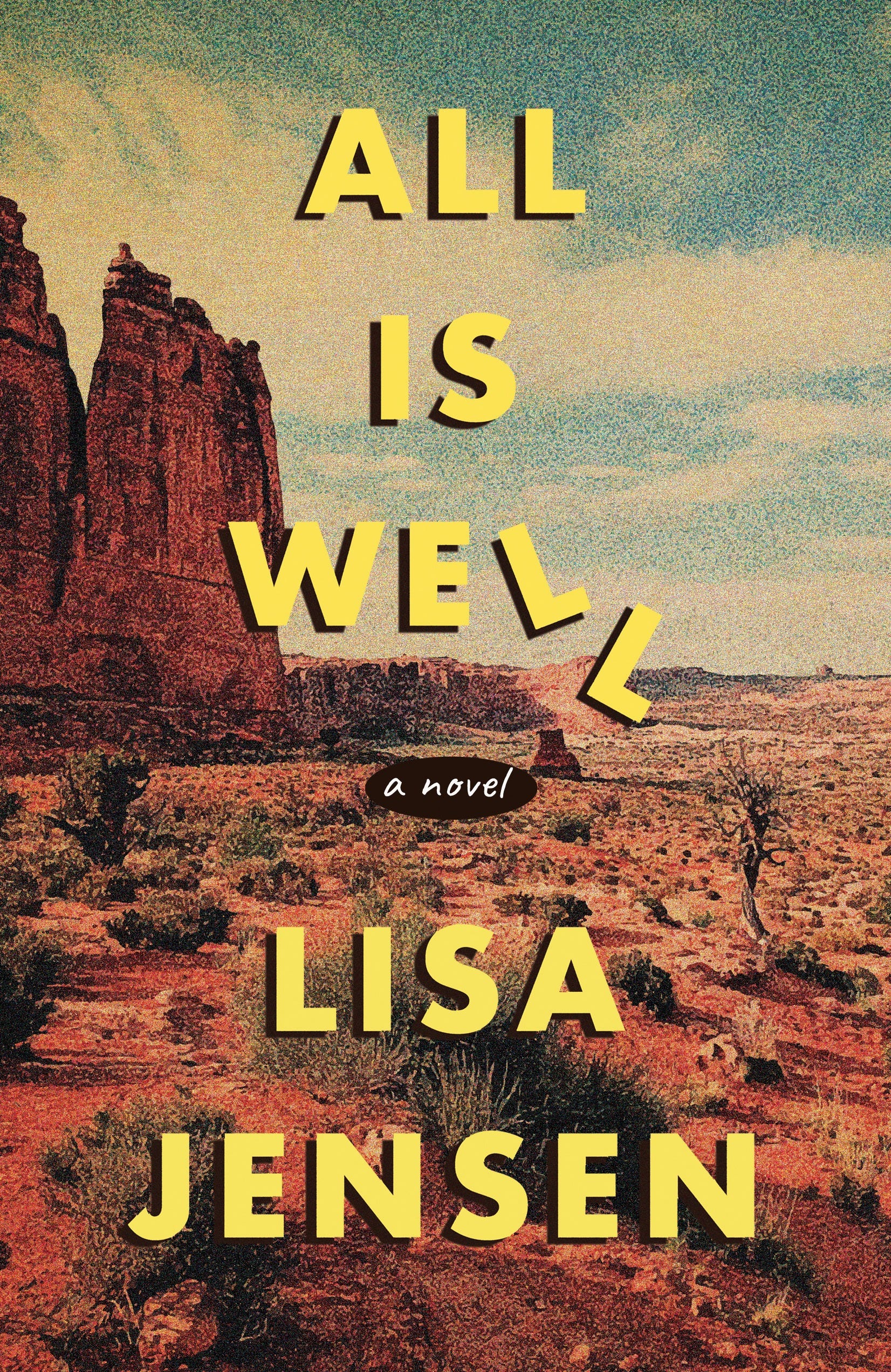
If I haven't said this before (and even if I have), David Biespiel's little book EVERY WRITER HAS A THOUSAND FACES is tremendously liberating on the question of what is/is not "better" or "good" poetry.
I’ve rewritten the heart out of pieces before. When I just can’t stop tinkering. I have a poem right now that I keep rewriting. There’s something lovely about sharing the raw intention of a poem. And your poems are so lovely. All of them.