
Orienteering
Reflections, Poem, Prompt

My sister and I have been talking lately about how poems take shape. About the differences between poems that feel molded by a feeling or an experience, an embodied place, a space of flow, versus poems that result from a left-brained wrestling match with the dictionary. She pointed me toward this beautiful essay, “On Crestfallenness: A Pilgrim, Not a Tractor,” by Kiki Petrosino. Two quotes stand out to me most from this piece, the first from poet Dean Young and the second from Petrosino. My hunch is that the heart of what’s being expressed here has broad applications—that what is true of poems might also be true of painting and gardening and parenting and activism.
“The poem always intends otherwise. At every moment the poet must be ready to abandon any prior intention in welcome expectation of what the poem is beginning to signal.” - Dean Young
“I’d like to read signals, entering the field of language dressed as a pilgrim, not a tractor. How would it feel to step back from intention, to refrain from marking a set path through the field? In that Otherwise, my poems emerge with their great horns and shining eyes. They already are complete. They already are real. My job is to witness, to encounter, to love those poems onto the page. Love; this is the work.” -Kiki Petrosino
Enter the field of language dressed as a pilgrim, not a tractor—I love this metaphor and invitation. I think we could expand it beyond the field of language, though. Poems don’t just arise from language, after all. For me, they often emerge from a strangely wordless space. A prickling aliveness. A sense that my edges are suddenly diffuse. A feeling of everything flowing in—and out—all at once. A charged sense that this moment, this moment here, this is what it’s all about. I want to be a pilgrim, not a tractor in the field of my life. In my encounters with the world inside me and the world around me. When I start there, at the starting point of everything, it feels natural to be a pilgrim in the field of language, too.
I wrote today’s poem as a pilgrim. My only intention was to write a poem, and really the core intention was to have the experience of writing a poem, more than it was to create a finished product. And even that intention felt like it came from something beyond me or deep within me. Like a poem was waiting at the door, and even without know what it would be about, I wanted more than anything to answer, to welcome it in. So, I followed my intuition. I started with a line that I’d jotted into my phone on a recent hike, found myself land on another line from my phone notes, and then the poem pulled me from there. I didn’t know what it was about. I didn’t know where we were going. I felt like a passenger, along for the ride. A reader, waiting to be surprised. Here is what emerged:
Orienteering
beneath
a canopy of kinglets
fluttering on the breeze

above
lichen, fractaled white
macro snowflakes who never melt

next to
creek who sings on rocks
music like ice clinking glass

my soft flesh
my scaffold of bones

rivered veins, pouring always
back to this ocean
this churning heart
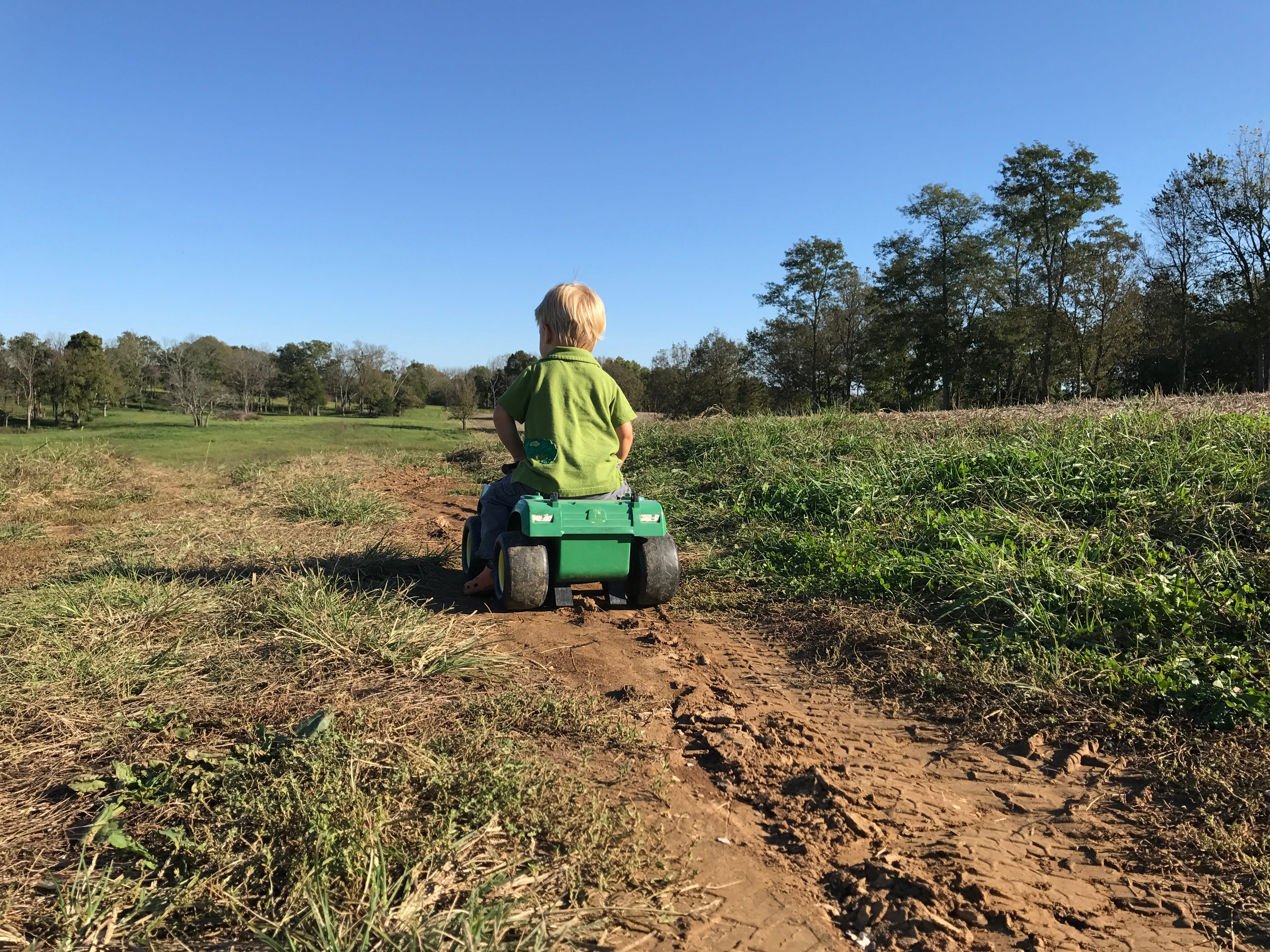
Sometimes, tractors can be pretty damn cute.
The Prompt
I make no claims about the oomph or caliber of this poem. When I show up as a pilgrim rather than a tractor, then the point, for me, isn’t to write a poem that will change or wow the world. (Though my ego loves that idea.) The point is to write a poem that changes me. Drops me into the soft openness of wow (or sometimes ouch). The point is for me to be rewritten, revised, revitalized. This has as much or more to do with the process than it does with the product.
If you would like a prompt to play with today, then I’ll offer up a layered one. Explore it at whichever level you’d like.
Take the word “tractor.” What does it conjure for you? Memories, associations, sensations? How about the word “pilgrim”? If one or both of these words bring juicy stuff to the surface, then dive on in and write away. If not, keep exploring . . .
In what areas or aspects of your life do you show up as a pilgrim? In what areas/aspects do you show up as a tractor? What does it look and feel like for you to be a pilgrim? What does it look and feel like for you to be a tractor? How do you see this play out in the people around you in your life? In the wider world? What balance would you personally like to build between these elements? How would that manifest? How would it feel? What are the risks or challenges or downsides?
How does this all tie into your work/play as a poet or artist?
If you’d like to get extra exploratory with this, you might take whatever has come up with for you so far and try writing two poems from it—one as your most pilgrimy self (full woo woo and willingness to wander, plus a bonnet or buckled shoes) and another as a tractor (full throttle focus on mechanics, on getting the words just right, on cutting your poem in a straight line mapped by the intentions you set out with).
I’d be so delighted to read whatever you come up with—reflections, poems, objections, etc! Thank you for being here.
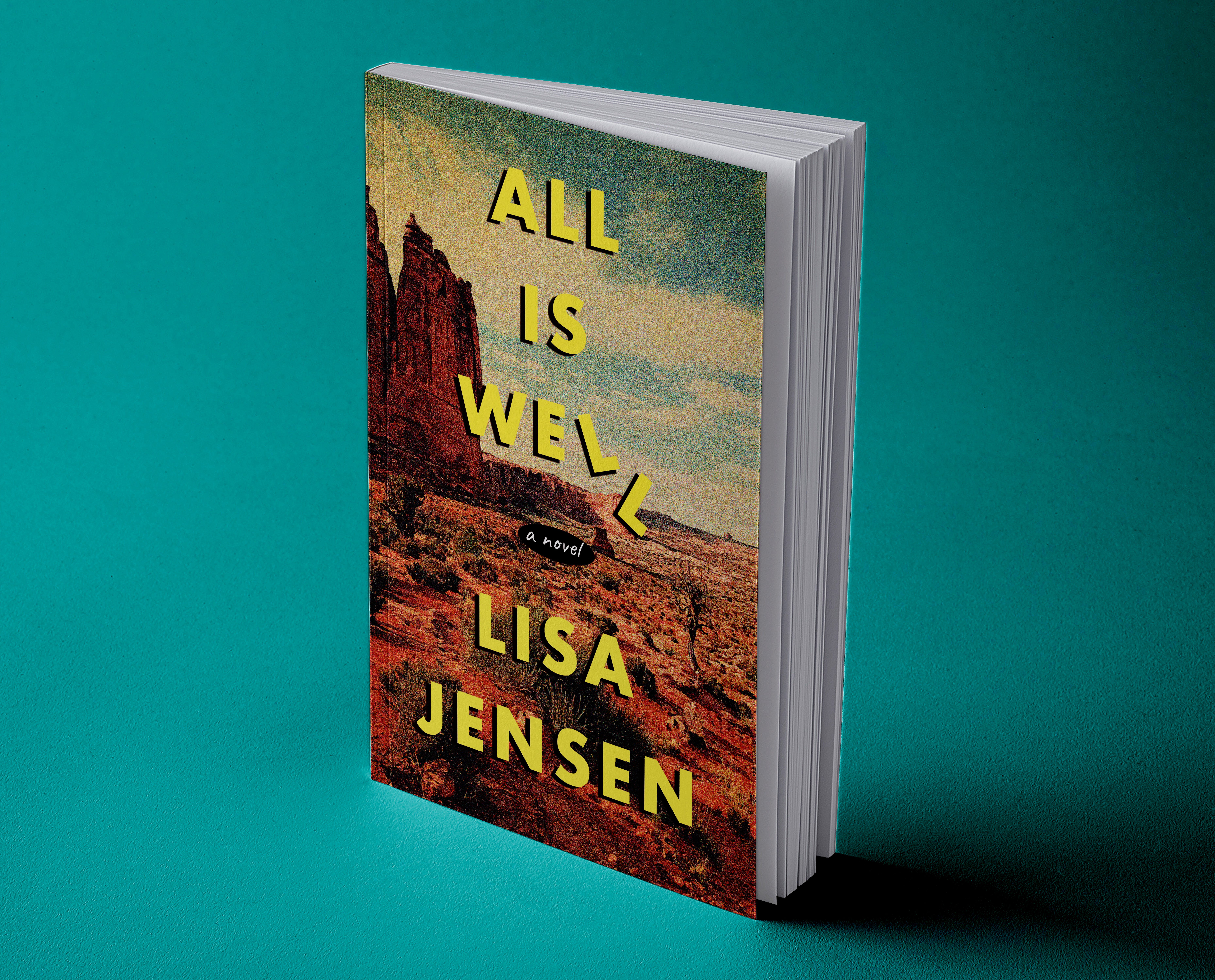
P.S. One of the joys of my week has been hearing from a handful of you that you’ve received my novel and are diving in! If you haven’t yet ordered a copy, you can do so here (or pretty much anywhere books are sold).
At Dusk
—-for my father, DS Horton
I have prayed in churches made of wood and stone,
but the best prayers I’ve known
begin here—
in the hush that follows the shutting down of the engine.
.
The field breathes again.
The birds return to their reckonings.
Dust settles back to the earth
as if remembering where it belongs.
.
This tractor is not my enemy.
It is the means by which I have torn and tended,
the companion to my weary hope.
It cannot love me, but it serves,
and I am charged to use it kindly.
.
Work is holy when done with care.
The plowshare cuts, yes,
but the seed still trusts the hand that drops it.
All things we make must one day sleep—
the soil, the body, the bright machine—
so the world may turn and feed us again.
.
Night gathers, slow as forgiveness.
I close the gate,
and the land, still breathing,
accepts me once more.
—-G
So lovely, the reflections and the poem. I love this: “ Poems don’t just arise from language, after all. For me, they often emerge from a strangely wordless space. A prickling aliveness. A sense that my edges are suddenly diffuse. A feeling of everything flowing in—and out—all at once. A charged sense that this moment, this moment here, this is what it’s all about.” I think so many of my poems come from those moments.